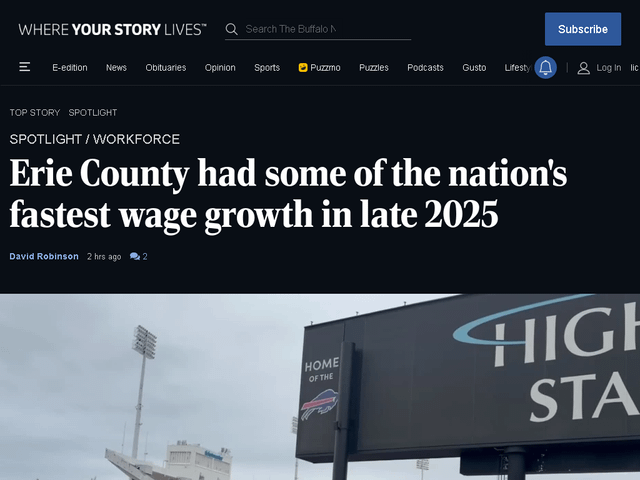
The Buffalo Niagara region is experiencing a unique economic trend, with slow hiring but strong wage growth. The average weekly wage for Erie County is $1,424, and for the Buffalo-Niagara metro is $1,394.
The average weekly wage is a key indicator of the region's economic health, and the current trend suggests that while hiring may be slow, workers are seeing significant increases in their pay.
>
The Buffalo Niagara region's economy has long been driven by its manufacturing and healthcare sectors, and the current wage growth trend may be a reflection of the region's efforts to diversify its economy and attract new industries. The City of Buffalo has invested heavily in revitalizing its downtown area and promoting entrepreneurship, which may be contributing to the region's strong wage growth.
The slow hiring trend, on the other hand, may be a reflection of the region's challenges in attracting and retaining top talent. Buffalo has struggled with brain drain in the past, with many of its young and educated residents leaving the area in search of better job opportunities. However, the region's strong wage growth may help to attract and retain workers, particularly in industries such as technology and healthcare.
The impact of the slow hiring trend and strong wage growth will be felt by South Buffalo homeowners, who may see an increase in their property values as the region's economy continues to grow. Parents in the Williamsville district may also see the benefits of the region's strong wage growth, as schools and educators may receive increased funding and resources.
Looking ahead, the Buffalo Niagara region will likely continue to experience slow hiring but strong wage growth, as the region's economy continues to evolve and diversify. The region's next step will be to attract and retain top talent, and to promote entrepreneurship and innovation in key industries such as technology and healthcare. The Buffalo Common Council will likely play a key role in promoting economic development and job growth in the region, and residents can expect to see increased investment in initiatives such as workforce development and small business support.