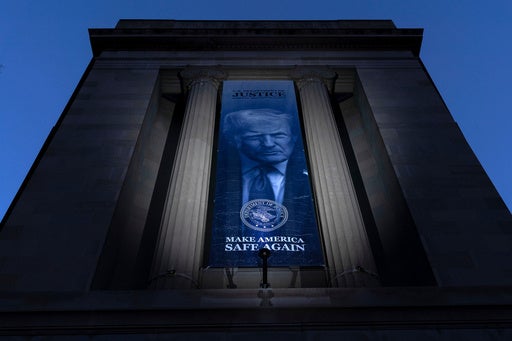
The Justice Department has withdrawn subpoenas that sought to compel reporters at The Washington Post and The Wall Street Journal to testify before a grand jury. This decision marks a significant development in the ongoing debate over the balance between national security and press freedom.
"The Justice Department has withdrawn the subpoenas," a spokesperson confirmed, without providing further comment. The subpoenas, which were issued in recent weeks, had sparked outrage among journalists and civil liberties groups, who argued that they posed a threat to the ability of reporters to protect their sources. The case has drawn attention in Rochester, where journalists and residents are closely following the developments. The University of Rochester has a strong journalism program, and many students and faculty members are interested in the implications of this case for the future of journalism. The Justice Department's decision to withdraw the subpoenas will likely be seen as a victory for press freedom, but it also raises questions about the department's approach to investigating leaks and its treatment of journalists. As the media landscape continues to evolve, the relationship between the government and the press will remain a critical issue, with Rochester residents and journalists paying close attention to any developments. The next step will be to monitor how the Justice Department approaches similar cases in the future, with many observers watching to see if this decision marks a shift in the department's policy. The impact of this decision will be felt across the country, from New York City to Los Angeles, as journalists and news organizations consider the implications for their work.
The withdrawal of the subpoenas is a positive development for journalists, who often rely on confidential sources to report on sensitive topics. The Rochester Democrat and Chronicle has a long history of investigative reporting, and the ability of reporters to protect their sources is essential to this work. As the media continues to play a critical role in holding those in power accountable, the public's right to know will remain a central issue, with Rochester residents benefiting from a free and independent press. The Justice Department's decision will likely be seen as a step in the right direction, but it is only one part of a larger conversation about the balance between national security and press freedom.